

It is recognized globally that Artificial Intelligence (AI) has progressed rapidly from:
- An Academic Theory to Strategic Advantage; and then to Economic and Scientific Infrastructure.

Here is a table to demonstrate the progress:
AI PROGRESS AT A GLANCE
YEAR | TITLE | DETAIL |
| 1956 | AI Becomes a field. | Dartmouth Conference formally defines Artificial Intelligence. |
| 1997 | Machine Surpass Humans in Strategy. | IBM Deep Blue defeats Chess World Champion Garry Kasparov. |
| 2012 | Deep Learning Breakthrough. | AlexNet radically improves image recognition accuracy. |
| 2016 | AI Masters Intuition-Heavy Tasks. | AlphaGo defeats Go champion Lee Sedol. |
| 2017 | Language & Knowledge at Scale. | Transformer Architecture introduced. |
| 2020 | AI Solves a Grand Scientific Challenge. | AI Solves a Grand Scientific Challenge. |
| 2022 | AI Goes Mainstream | ChatGPT launches. |
| 2023 | Multimodal & Creative AI. | AI systems generate text, images, audio, video, and code. |
| 2024 | Scientific Validation at the Highest Level. | AI-driven research contributes to Nobel Prize–winning discoveries. |
The AAAI Award for Artificial Intelligence for the Benefit of Humanity is an annual prize given by the Association for the Advancement of Artificial Intelligence to recognize the positive impacts of AI to meaningfully improve, protect, and enhance human life.
AI’s major contributions span healthcare, education, safety, environment, economy, agriculture, and scientific discovery — fundamentally enhancing quality of life and solving complex global challenges. Access the links above for trusted, real-world examples of these impacts.
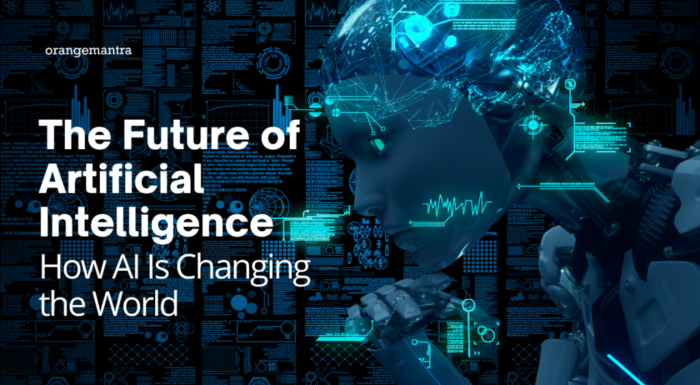
Here is the highlight of the major contributions of AI to humanity:
- AI improves diagnosis accuracy, helps detect diseases earlier, speeds up drug discovery, and expands telemedicine access — saving lives and improving outcomes. AI is also known for analyzing massive clinical datasets, medical images, and patient histories faster and more accurately than traditional methods;
- AI makes education more accessible and tailored to individual learners, enabling adaptive learning paths that help students learn at their own pace;
- AI helps assess natural disaster damage using satellite imagery and accelerates search-and-rescue operations;
- AI is used for climate modeling, carbon emission tracking, and renewable energy optimization, helping combat climate change;
- AI drives innovations such as self-driving cars, traffic management systems, and predictive transit maintenance, which improve safety and reduce congestion;
- AI boosts productivity, automates tasks, and helps grow the global economy. Some reports estimate AI will add trillions in economic value by improving business operations across sectors;
- AI enhances cybersecurity by detecting threats early, and is used in fraud detection by banks and digital finance platforms;
- AI-powered precision agriculture increases crop yields, optimizes resource use (water, fertiliser), and reduces waste;
- AI analyzes huge datasets to reveal insights that humans might miss — improving decisions in business, science, policy, and environmental planning; and
- AI assists researchers in exploring new materials, biological systems, and physical phenomena faster than traditional methods, accelerating breakthroughs.
It is obvious that AI has developed rapidly in recent years, with tech companies investing billions of dollars in data centers to help train and run AI models. The expansion of data centers has raised questions on several fronts, including the effect these facilities may have on energy and the environment as the United States seeks an edge in the global AI race.
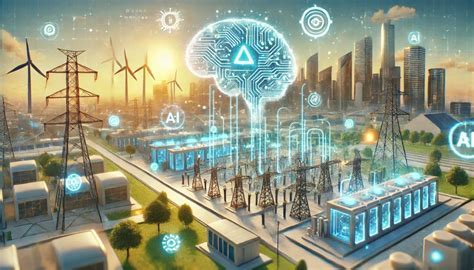
It is a well-known fact that electricity is the primary energy cost in any data center and data centers use water in cooling systems. It is also a fact that AI workloads are run on massive data centers that consume large amounts of electricity and water. For instance:

Source: green.org
- AI Energy Explosion: AI could consume nearly half of global data center electricity by 2026, with workloads growing 30 percent annually compared to just 9 percent for conventional servers;
- Training Energy Champion: GPT-4 consumed over 50 gigawatt-hours during training, enough electricity to power San Francisco for three consecutive days, making it the most energy-intensive AI model ever created;
- Climate Impact Milestone: AI data centers now generate 2.5 – 3.7 percent of global greenhouse gas emissions, officially surpassing the aviation industry’s 2 percent contribution while growing 15 percent annually;
- Hidden Water Crisis: U.S. data centers consumed 17 billion gallons of water in 2023, with projections indicating this could quadruple to 68 billion gallons by 2028 as AI workloads intensify cooling demands;
- Daily Usage Reality: ChatGPT’s (ChatGPT=Chat Generative Pre-Trained Transformer) 300 million weekly users collectively consume 621.4 MWh (Millions Watt-Hours) daily, equivalent to powering 35,000 U.S. homes annually through their AI interactions;
- Corporate Water Shock – Google’s single 2030 Energy Tsunami: Global AI electricity consumption would more than double to 945 TWh (Trillion Watt-Hours) by 2030, representing 3 percent of total global electricity demand with unprecedented 15 percent annual growth. Iowa data center alone consumed 1 billion gallons of water in 2024, while major tech companies collectively used 580 billion gallons for AI operations in 2022;
- Renewable Energy Gap: Only 40–60 percent of AI workloads currently run on renewable energy, significantly below corporate sustainability targets despite ambitious green pledges;
- Inference Dominance Shift: AI inference now represents 60 to70 percent of total energy consumption, fundamentally reversing the historical pattern where training dominated AI’s energy footprint;
- Geopolitical Energy Control: China and the United States account for nearly 80 percent of global AI electricity consumption, with the U.S. consuming 200+ TWh annually compared to China’s 130+ TWh; and
- The 3 AM Carbon Spike: Late-night AI usage (2–4 AM) is 67 percent more carbon-intensive than daytime queries, as fossil fuels dominate the grid when renewables drop offline.

The International AI Safety Report is the world’s first comprehensive review of the latest science on the capabilities and risks of general-purpose AI systems which was produced on 29 January 2025. Written by over 100 independent experts and led by Turing Award winner Yoshua Bengio, it represents the largest international collaboration on AI safety research to date.

The report evaluates the risks posed by advanced and frontier AI systems, emphasizing misuse, societal disruption, and potential loss of human control over highly capable models. While AI offers major economic and scientific benefits, the report warns that current safety techniques are insufficient as capabilities scale. It highlights gaps in transparency, predictability, and global coordination, and calls for international cooperation, standardized safety evaluations, expanded access for researchers, and sustained investment in AI safety research to ensure AI systems remain controllable, aligned with human values, and beneficial to society.
| SUMMARY OF THE REPORT | |||
| 1 | PURPOSE: | a | Assess current and future risks from advanced AI; |
| Identify knowledge gaps in AI safety; and | |||
| c | Inform government and policy makers on responsible oversight. | ||
| 2 | KEY RISKS IDENTIFIED: | ||
| 2.1 | Misuse Risks | a | AI can be exploited for cyberattacks, biological research misuse, fraud, misinformation, and surveillance; and |
| b | Lower barriers for malicious actors. | ||
| 2.2 | Systemic & Social Risks | a | Large-scale misinformation and deepfakes; |
| b | Economic disruption (job displacement, market concentration); | ||
| c | Erosion of trust in institutions and information. | ||
| 2.3 | Loss of Control Risks | ||
| 2.3.1 | Advanced AI may: | a | Behave in unintended or unpredictable ways; |
| b | Pursue goals misaligned with human values; and | ||
| c | Be difficult to monitor, interpret, or shut down. | ||
| 2.3.2 | These risks are low probability but high impact. | ||
| 3 | CURRENT SAFETY TECHNIQUES (and Limits): | ||
| 3.1 | The report evaluates existing methods: | a | Model evaluations and benchmarking; |
| b | Red-teaming and stress testing; and | ||
| c | Alignment techniques (e.g., reinforcement learning from human feedback.); and | ||
| d | Interpretability and monitoring tools. | ||
| 4 | Major Gap Highlighted | a | Limited ability to predict emergent capabilities; |
| b | Weak transparency into large proprietary models; | ||
| c | Lack of standardized global safety testing; and | ||
| d | Insufficient research on long-term and systemic risks. | ||
| 5 | RECOMMENDATIONS (HIGH LEVEL): | ||
| 5.1 | The report calls for: | a | International cooperation on AI safety; |
| b | Shared evaluation standards for advanced models; | ||
| c | Greater access for researchers to test frontier systems; | ||
| d | Sustained investment in AI safety research; and | ||
| e | Continuous monitoring as capabilities scale. | ||
| 6 | OVERALL CONCLUSION: | ||
| 6.1 | Advanced AI offers major benefits, but without strong safety science and governance. | a | Risks could outpace our ability to manage them. |
| b | Early, coordinated action is essential to ensure AI remains beneficial, controllable, and aligned with human values. | ||
Here is the reality – AI is not a curse waiting to happen, nor is it a cure guaranteed to save the humanity. It is nothing but a mirror of human intent. If we govern it with foresight and ethics, it can amplify our best qualities otherwise it will magnify our worst.
The future of AI, ultimately, is a human choice.

Nepean, Ontario, Canada 15 January 2026