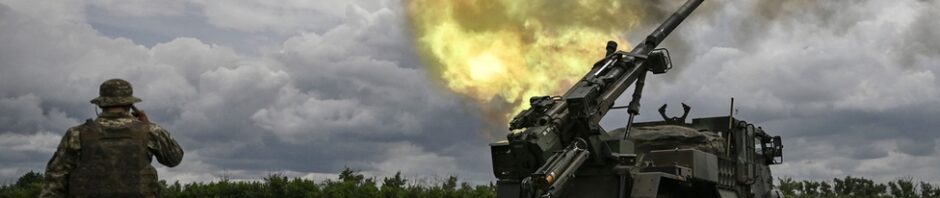

Wars are not just a humanitarian or political issue — it is a major environmental and climate issue. While bombed cities signal human tragedy, it also indicates a surge of greenhouse gases (GHG) warming the planet. Across Ukraine, Gaza, and Iran, war is not only destroying homes and lives; it is rapidly reshaping the climate. Scientists warn that the climate impacts of warfare are real, measurable, and largely neglected by global climate policy.
The study, published on the third anniversary of the Ukraine invasion, found the fighting and its consequences had led to 55m tonnes of emissions in the past 12 months.
With Russia’s war against Ukraine ongoing, emissions of GHG have continued to grow. It’s concluded that the GHG emissions attributable to three years since the full-scale invasion have increased to 236 million tCO2e. The emissions are the equivalent of the annual emissions of Austria, Hungary, Czech Republic and Slovakia combined. With the Social Cost of Carbon of 185 USD / tCO2 e applied, the climate damage caused by this war amounts to over 43 billion USD.
DISTRIBUTION OF EMISSIONS PER IMPACTED CATEGORY
| Category | Emissions 3 Years -MtCO2e | Percentage | |
| 1 | Warfare | 81.7 | 34 |
| 2 | Landscapes | 49.4 | 21 |
| 3 | Energy Infrastructure | 17.0 | 7 |
| 4 | Refugees | 4.2 | 2 |
| 5 | Civil Aviation | 20.3 | 9 |
| 6 | Reconstruction | 64.2 | 27 |
| TOTAL | 236.8 | 100 |
An unusually dry and hot summer last year, thought to have been exacerbated by climate breakdown, led to a notable jump in landscape fires, with the 92,100 hectares burned in 2024 more than double the annual average of 38,300 destroyed in the previous two years, the researchers said.
The U.S. and Israel struck more than 6,000 targets in Iran in the first two weeks of the war, releasing huge amounts of carbon. The following picture was taken March 13 this year after airstrikes in Tehran. (Image credit: Fatemeh Bahrami/Anadolu via Getty Images):
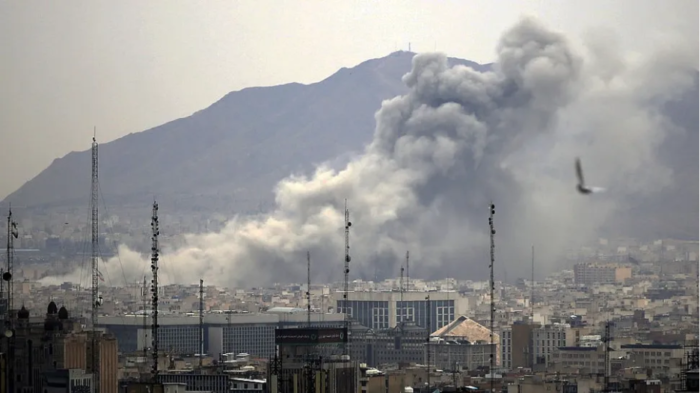
The first two weeks of the war between the U.S., Israel and Iran created immense present and future greenhouse gas emissions, draining the global carbon budget faster than 84 countries combined, a new analysis finds.
Between Feb. 28 and March 14, 2026, the warring parties released almost 5.6 million tons (5.1 million metric tons) of carbon dioxide (CO2) and other greenhouse gases by firing carbon-intensive weapons, powering fighter jets and ships, and bombing infrastructure such as oil storage facilities and civilian buildings, researchers found.
For comparison, if these emissions continued at the same rate for one year, they would be roughly equivalent to the annual carbon emissions of the 84 lowest emitting countries in the world combined. And the emissions from the first two weeks of the conflict are higher than Iceland’s annual carbon emissions, which in 2024 totaled 4.7 million tons (4.3 million metric tons) of CO2 via all sources, the team said.
- “Every missile strike is another downpayment on a hotter, more unstable planet, and none of it makes anyone safer,” Patrick Bigger, a co-author of the analysis and a research director at the Climate and Community Institute, a climate and economy think tank, told The Guardian.
Analyses by climate and conflict researchers suggest that global military activities, even outside periods of intense conflict, generate approximately 5.5 percent of global GHG emissions. This makes the world’s militaries collectively comparable to major industrial sectors like aviation and shipping.
Armed conflicts have emerged as a significant but often overlooked drivers of climate change. The wars involving Ukraine and Iran demonstrate how modern warfare contributes to GHG emissions, environmental degradation, and global energy disruptions.
Wars influence climate through four primary mechanisms:
- Direct Emissions: Fuel combustion from military vehicles, aircraft, and explosions;
- Environmental Destruction: Forest fires, land degradation, and ecosystem loss;
- Reconstruction Emissions: Cement and steel production for rebuilding; and
- Global Energy Disruption: Increased fossil fuel uses due to supply shocks.
The Ukraine war provides one of the clearest case studies of conflict-related emissions because scientists have attempted to quantify its full climate impact.
WHERE EMISSIONS COME FROM
| Source | Ukraine War | Iran Conflict |
| Military operations | Tanks, jets, artillery (major contributor) | Airstrikes, missiles (high intensity) |
| Fires | Massive forest fires (millions of hectares burned) | Oil fires, industrial fires |
| Infrastructure damage | Cities, power plants, pipelines | Oil refineries, export terminals |
| Energy system disruption | Gas shifts in Europe | Global oil market shock |
| Reconstruction | HUGE future emissions (cement, steel) | Likely large if war expands |
UKRAINE WAR vs MAJOR COUNTRIES
Total war emissions (so far): Ukraine war: ~230–311 million tonnes CO₂e. How that compares globally:
| Country | Annual CO₂ emissions |
| Canada | ~730 million tonnes |
| France | ~300 million tonnes |
| United Kingdom | ~330 million tonnes |
| Germany | ~670 million tonnes |
| United States | ~5,000+ million tonnes |
| China | ~11,000+ million tonnes |
INDIRECT GLOBAL CLIMATE EFFECTS
Both wars show that conflict impacts go far beyond borders:
- Energy policy disruption;
- Countries increase fossil fuel use during crises;
- Renewable transitions slow down;
- Climate cooperation weakens;
- Wars divert funding from climate action; and
- Reduce international cooperation.
Wars delay global climate progress, not just add emissions
COMPARATIVE ANALYSIS
| Factor | Ukraine War | Iran Conflict |
| Duration | Long-term | Short-term (so far) |
| Emissions | Hundreds of millions of tonnes | Millions (rapid spikes) |
| Key drivers | Fires, infrastructure damage | Oil fires, airstrikes |
| Global impact | European energy shift | Global oil market shock |
| Long-term risk | Reconstruction emissions | Fossil fuel resurgence |
When conflicts end, the climate impact continues through the massive task of reconstruction. Rebuilding homes, schools, hospitals, bridges, power stations, and transport networks requires enormous quantities of steel, cement, and asphalt, all extremely carbon-intensive materials. In fact, reconstruction emissions often rival or even exceed the emissions produced during combat.
The study on Ukraine warns that the rebuilding phase will lock the nation into years of high emissions, as essential infrastructure must be replaced almost entirely from scratch. This pattern will repeat in Gaza, Mariupol, and other devastated cities around the world.
This means the climate burden of war extends decades beyond the conflict itself.
War impacts the global climate across multiple layers, spanning immediate atmospheric emissions to long-term ecosystem destruction and the disruption of international climate action.
Militaries consume enormous amounts of fossil fuels, which contribute directly to global warming. If the US military were a country, for example, it would have the 47th highest emissions total worldwide.
Bombing and other methods of modern warfare directly harm wildlife and biodiversity. The collateral damage of conflict can kill up to 90 percent of large animals in an area.
Pollution from war contaminates bodies of water, soil, and air, making areas unsafe for people to inhabit.
The bottom line is that war acts as a “hidden accelerator” of climate change, with impacts that are both immediate and long-lasting.
