

On 27 November, 2025, the government of Canada and the government of Alberta formally signed a Memorandum of Understanding (MOU) for a major energy and infrastructure pact focussed on expanding oil exports, regulatory reform, and carbon emission policy.
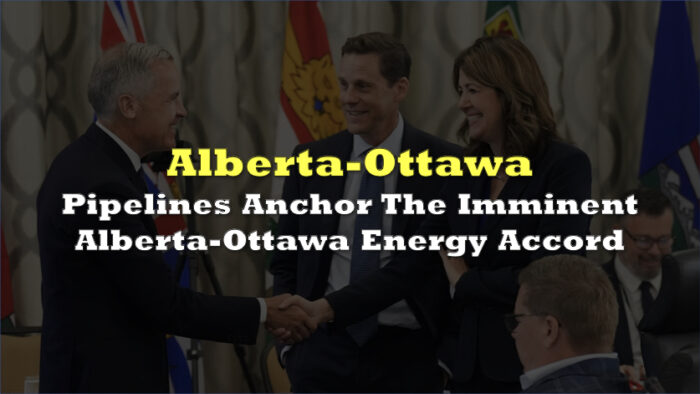
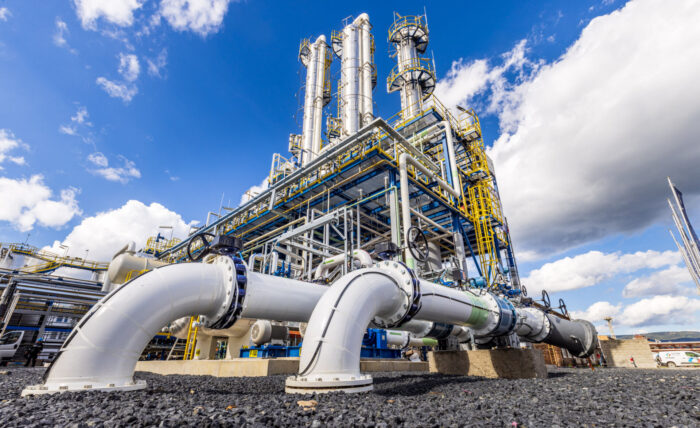
The focus of the MOU is to build a bitumen pipeline. A bitumen pipeline is infrastructure used to move heavy crude oil (bitumen) efficiently from where it’s produced to where it’s processed or sold.
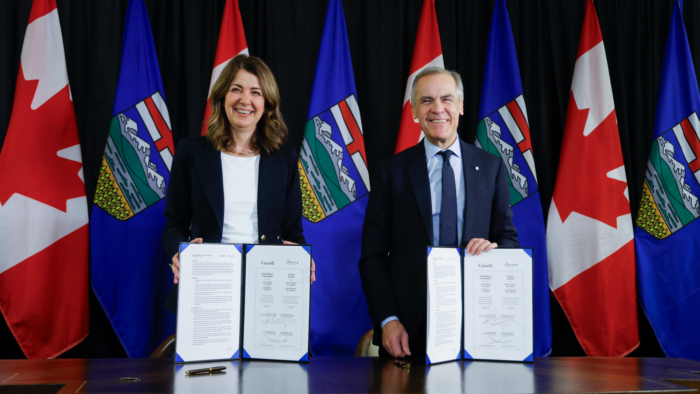
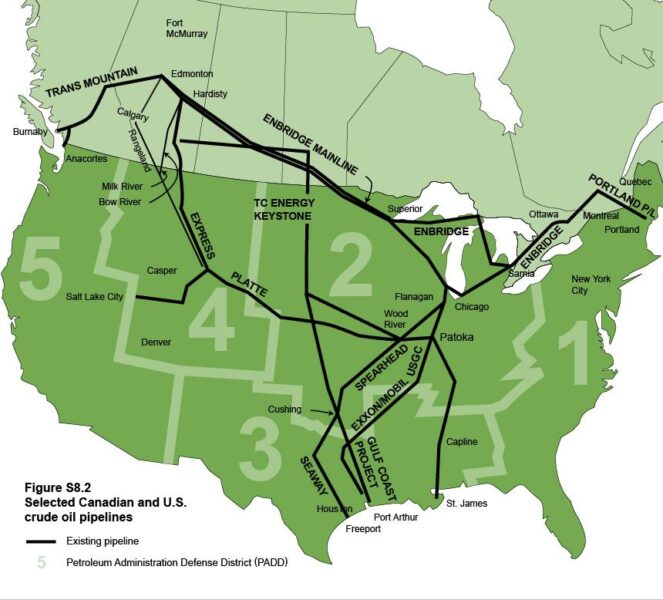
The Pipeline Agreement is a broad federal-provincial partnership that ties energy export expansion and regulatory relaxation to carbon reduction commitments, Indigenous engagement, and new clean-technology investments. It’s designed to diversify Canadian oil export markets (especially to Asia), promote economic growth, and reshape federal-Alberta energy relations — but it remains subject to future approvals, private financing, and ongoing consultations.
Here’s a summary of the MOU:

| 1 | KEY ELIMENTS OF THE PIPELINE AGREEMENT: |
| 1.1 | New Oil Pipeline to Asia: |
| 1.1.1 | Both governments agree to advance a privately financed oil pipeline from Alberta’s oil sands to a deep-water Pacific port, aimed at boosting exports to Asian markets. It’s expected to carry at least 1 million barrels per day of low-emission Alberta bitumen; |
| 1.1.2 | This pipeline is in addition to the existing Trans Mountain Expansion (which adds roughly 300,000–400,000 b/d); |
| 1.1.3 | The project will be Indigenous co-owned with economic benefits and is designated a project of national interest; and |
| 1.1.4 | Application should be ready for the federal Major Projects Office by July 1, 2026. |
| 1.2 | Regulatory and Legislative Changes: |
| 1.2.1 | The Oil Tanker Moratorium Act may be adjusted if the pipeline is approved, to enable tanker operations needed for exports; |
| 1.2.2 | Federal regulations like the Clean Electricity Regulations are suspended in Alberta to encourage power sector investment and reduce barriers; and |
| 1.2.3 | Canada will amend the Competition Act to reduce restrictions on environmental advertising by energy companies. |
| 1.3 | Emissions and Climate-Related Commitments: |
| 1.3.1 | Federal oil and gas emissions cap is not implemented, removing a major regulatory constraint cited by Alberta’s energy sector; |
| 1.3.2 | Alberta commits to strengthen industrial carbon pricing through its existing TIER system and negotiate with Canada on a long-term framework by April 1, 2026; and |
| 1.3.3 | A methane equivalency agreement targeting a 75 percent reduction in methane emissions by 2035 (relative to 2014) is part of the deal. |
| 1.4 | Carbon Capture, Utilization and Storage (CCUS): |
| 1.4.1 | Both governments support the world’s largest CCUS project (led by private sector Pathways companies) to lower the carbon intensity of Alberta oil, with coordinated financial incentives (federal tax credits and provincial programs); and |
| 1.4.2 | The MOU ties progress on the pipeline and Pathways project together — neither moves forward independently. |
| 1.5 | Broader Energy and Infrastructure Goals: |
| 1.5.1 | Alberta and Canada will collaborate on electricity generation, including nuclear power planning and new transmission interties linking Alberta with British Columbia and Saskatchewan; and |
| 1.5.2 | Plans include AI data-centre development powered in Alberta, partly to support sovereignty and emerging technologies. |
| 1.6 | Indigenous and Intergovernmental Engagement: |
| 1.6.1 | The governments agree to meaningfully consult Indigenous Peoples in Alberta and B.C. throughout project planning and benefit sharing; and |
| 1.6.2 | Engagement with British Columbia is part of the agreement, though B.C.’s government and some First Nations leaders have expressed strong opposition to the pipeline plan. |
Here’s the Context and Reaction:
- The pact shifts federal policy away from a planned emissions cap and tight electricity regulations, aiming to boost investment and production in Alberta’s energy sector; and
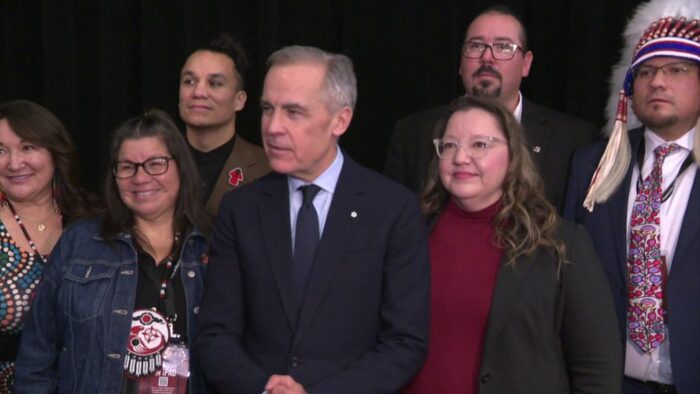
- Environmental groups and some Indigenous leaders criticize the deal for undermining climate goals and risking ecological harm, especially to coastal zones.
Here is an overview of the Pros and Cons:
- PROS:
- Market Diversification:
- Reduces reliance on U.S. buyers by opening direct access to Asian markets, potentially improving prices for Canadian oil;
- Economic Boost:
- Billions in private investment, construction jobs, long-term operations employment, and increased government revenues;
- Indigenous Participation:
- Emphasis on Indigenous ownership and revenue-sharing, which (if done right) could be a meaningful shift from past projects;
- Regulatory Certainty:
- Alberta gets relief from an oil-and-gas emissions cap and clearer rules, which industry argues is essential for investment;
- Lower-emissions Oil:
- Ties pipeline expansion to CCUS and methane reduction, aiming to lower the carbon intensity of oil sands production; and
- Nation-building Framing:
- Designation as a project of national interest strengthens federal backing and coordination.
- Market Diversification:
- CONS:
- Climate Credibility Risks:
- Dropping the federal emissions cap weakens Canada’s climate commitments and could hurt international reputation;
- Environmental Concerns:
- Increased spill risk, tanker traffic on the Pacific coast, and cumulative impacts on sensitive ecosystems;
- Strong Opposition:
- Resistance from B.C.’s government, environmental groups, and some First Nations could delay or derail the project;
- Regulatory Trade-offs:
- Suspending or amending federal regulations sets a precedent other provinces may demand;
- Execution Risk:
- CCUS at the promised scale is unproven and expensive; if it underdelivers, emissions targets may be missed; and
- Political Fragility:
- A future federal government could revisit or unwind parts of the deal.
- Climate Credibility Risks:
New public opinion polling data collected November 26th and 27th from the non-profit Angus Reid Institute shows the path from paper to pipeline completion far more complex:
- Nationally, there is majority support (60 Percent) for a hypothetical pipeline project from Alberta to the northern coast of British Columbia; and
- One-quarter oppose the idea (25 Percent), while 15 per cent are unsure or have no opinion;
- Support outweighs opposition in B.C. (53 Percent to 37 Percent), representing a significant increase in amenability compared to the prior decade.
These data are also similar to results from seven weeks ago. Current support is unsurprisingly highest in Alberta and Saskatchewan at an identical 74 percent.
The federal Liberal government does face internal challenges selling this concept to a chunk of its base and some of its caucus. More than one-third who voted for the Liberals in April are opposed (17 or 18 Percent), though most support it. This announcement will be viewed as a victory by Conservative voters, with nine-in-10 (89 Percent) supportive of a pipeline their party has long pushed for.
Canadians split as to whether provinces should have veto power over pipelines.
Prime Minister Carney said this week in the House of Commons that the agreement signed between Alberta and the federal government “creates necessary conditions, but not sufficient conditions”, adding that “the government of British Columbia has to agree” as well as First Nations along the route.
Here is the reaction to the proposed project from the BC government and First Nations:
- The Government of British Columbia, which has stated it opposes altering the Oil Tanker Moratorium Act and does not currently support pipeline development to its coast; and
- A coalition of several First Nations on the north and central coast of British Columbia and Haida Gwaii that has flatly rejected the pipeline proposal and any weakening of the Oil Tanker Moratorium Act.

If Canada wanted fewer pipeline fights, perhaps it could have followed the Norway model by specifying:
- Clear, stable rules;
- Early, real Indigenous consent;
- Honest climate messaging;
- Revenue-sharing that feels fair; and
- Fewer “Grand Bargains” announced before groundwork.
It is not a secret that Canada and Norway are both major energy exporters, but they adopt different policy and economic approaches. For instance:
- Norway uses high taxes and state ownership to build one of the largest sovereign wealth funds in the world, providing broad public benefit and long-term fiscal stability, whereas;
- Canada (especially Alberta) is pursuing new pipeline infrastructure to diversify markets and financially support its energy sector but retains a largely private-sector model and is still shaping how resource revenues are captured and reinvested.
These contrasts influence how each country views energy infrastructure, export strategy, fiscal policy, and climate policy, which is central to current debates around the proposed pipeline projects.
Key Differences: Canada (Alberta) vs. Norway
| Feature | Canada / Alberta | Norway |
| Ownership of Energy Resources | Mostly in private hands (energy firms), government regulates but does not usually take equity. | Majority state-owned assets (Equinor, Petoro) provide government influence and revenue. |
| Revenue Capture and Wealth savings | Alberta historically captures a smaller share via royalties & taxes, and its heritage fund is comparatively small; pipeline revenue and strategy still evolving. | Norway collects large profit taxes and directs these into its sovereign wealth fund to benefit future generations. |
| Export Market Focus | Traditionally heavily tied to U.S. market; new pipeline aims to expand access to Asia. | Major exporter to Europe (~90 % gas export to EU), diversified global role. |
| Public Support & Political context | Mixed domestic support; pipeline plans are politically contentious and involve multi-level negotiations with Indigenous partners. | Domestic consensus historically stronger around energy management; wealth fund approach enjoys broad support. |
| Climate Strategy | Committed to net-zero by 2050; scaling carbon capture and nuclear in plans tied to pipelines. | Also committed to climate goals; wealth fund and policies actively address ESG factors, including emissions from investments. |
What Canada Could Learn from Norway?
- Economic Stability & Saving:
- Advocates argue that a Norway-style model (Higher Tax Capture, meaningful Sovereign Wealth Management) could provide more stable long-term benefits to citizens instead of boom-bust cycles tied to commodity price swings;
- Energy Policy Balance:
- Opinion pieces suggest Canada could adopt a more cohesive strategy similar to Norway’s blended approach to traditional energy and renewables, balancing export leadership with climate commitments; and
- Fiscal and Regulatory Frameworks:
- Norway’s use of high marginal resource taxes and strict investment rules for its sovereign fund contrasts with Canada’s more diverse (and historically lower) royalty and tax regimes, especially in Alberta.
Here are the main reasons policymakers and analysts recommend it for Canada:
1. Better Management of Resource Revenue:
- Canada is rich in natural resources, especially oil and gas, but captures a relatively small share of the total revenue compared with Norway’s system. Some argue that a sovereign wealth fund could:
- Ensure future generations benefit from current resource extraction;
- Stabilize government budgets against boom-and-bust commodity prices; and
- Reduce fiscal volatility from swings in oil markets.
- Example Idea: Alberta once had a resource fund similar in purpose, but unlike Norway’s, it did not accumulate large savings; and
- Why this Matters: Norway’s model turns temporary natural resource windfalls into permanent national wealth.
2. Stronger Economic Stability & Long-Term Planning:
- Norway’s model aims to:
- Avoid “Dutch disease” (where resources hurt other industries);
- Maintain low unemployment and stable fiscal policy; and
- Protect public services and pensions with long-term funds.
- In contrast, Canadian policy sometimes shifts spending directly with resource revenue, creating budget uncertainty.
3. Potential to Fund Social Services, Infrastructure & Transition:
- A well-funded sovereign wealth fund could be used to:
- Support healthcare, education, pensions, and climate initiatives; and
- Finance the Green Transition while maintaining economic resilience.
- Norway uses its oil revenue to subsidize low-carbon tech (e.g., electric vehicles) and diversify the economy.
4. Global Influence & Financial Strength:
- Because Norway invests energy profits broadly across global markets, its sovereign funds:
- Owns shares in thousands of companies; and
- Helps protect against domestic economic downturns.
- Generates stable income without high domestic taxes on still-productive industries.
